Overview
Conventional UT uses high-frequency sound to find internal flaws in welds, forgings and plate. It needs no radiation, so other work can carry on next to it, and it is very good at finding planar defects like cracks and lack of fusion.
How it works
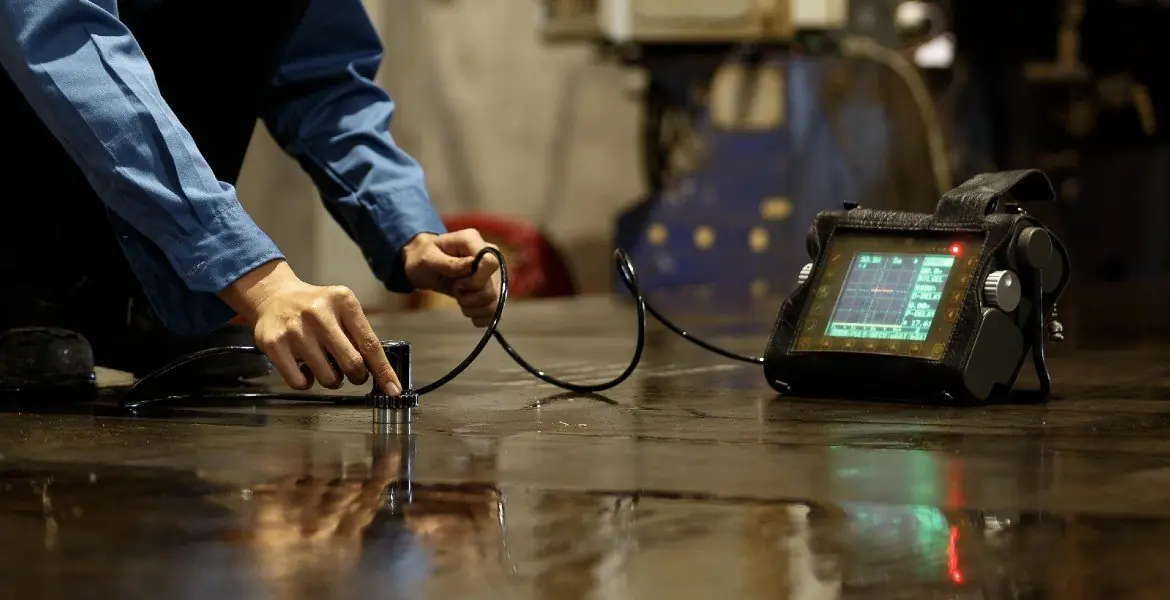
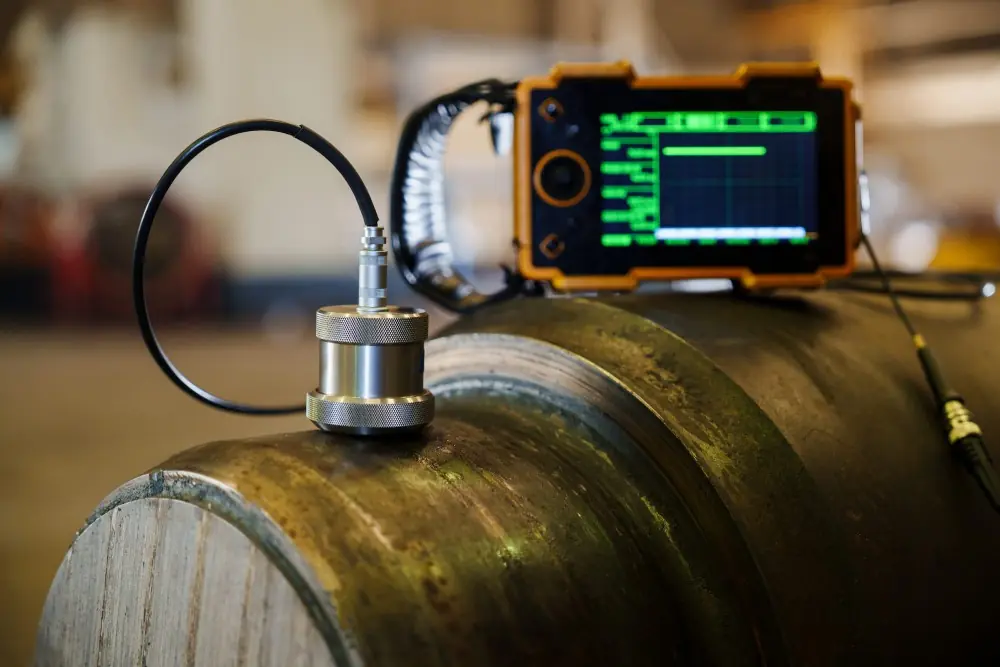
A probe sends sound pulses into the material. Reflections from flaws or the back wall appear on the flaw detector screen, where the technician measures their position and amplitude against a reference standard such as DAC or TCG.
Typical applications
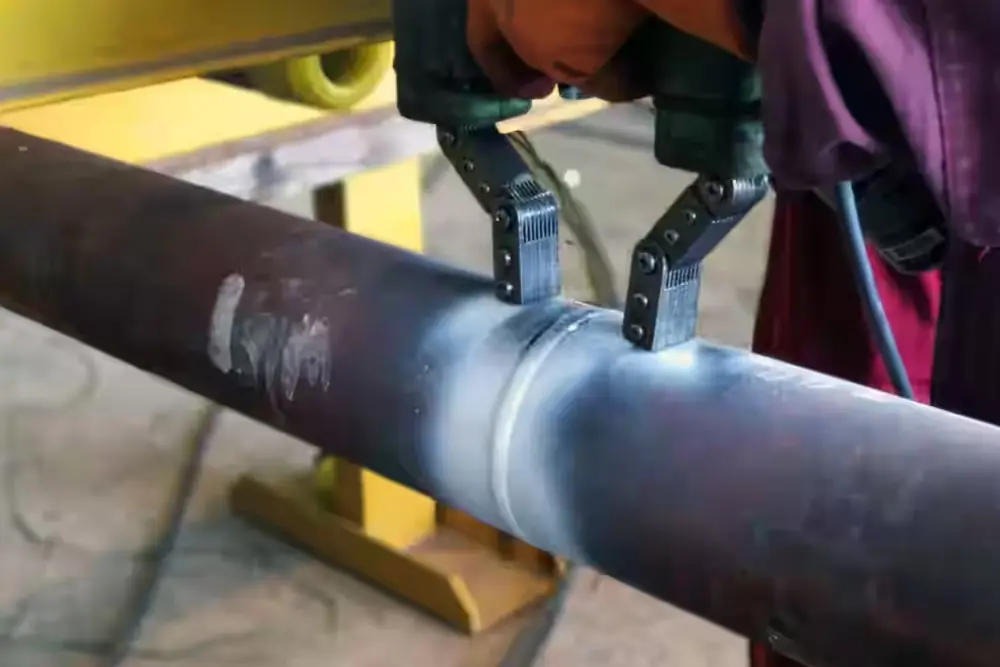
- Butt and fillet weld inspection
- Lamination checks on plate before welding
- Forgings, shafts and castings
- T, K and Y nodes in structural steel
What you receive
- UT report with indication sizing and location
- Calibration and DAC records
- Accept / reject decision against the code