Overview
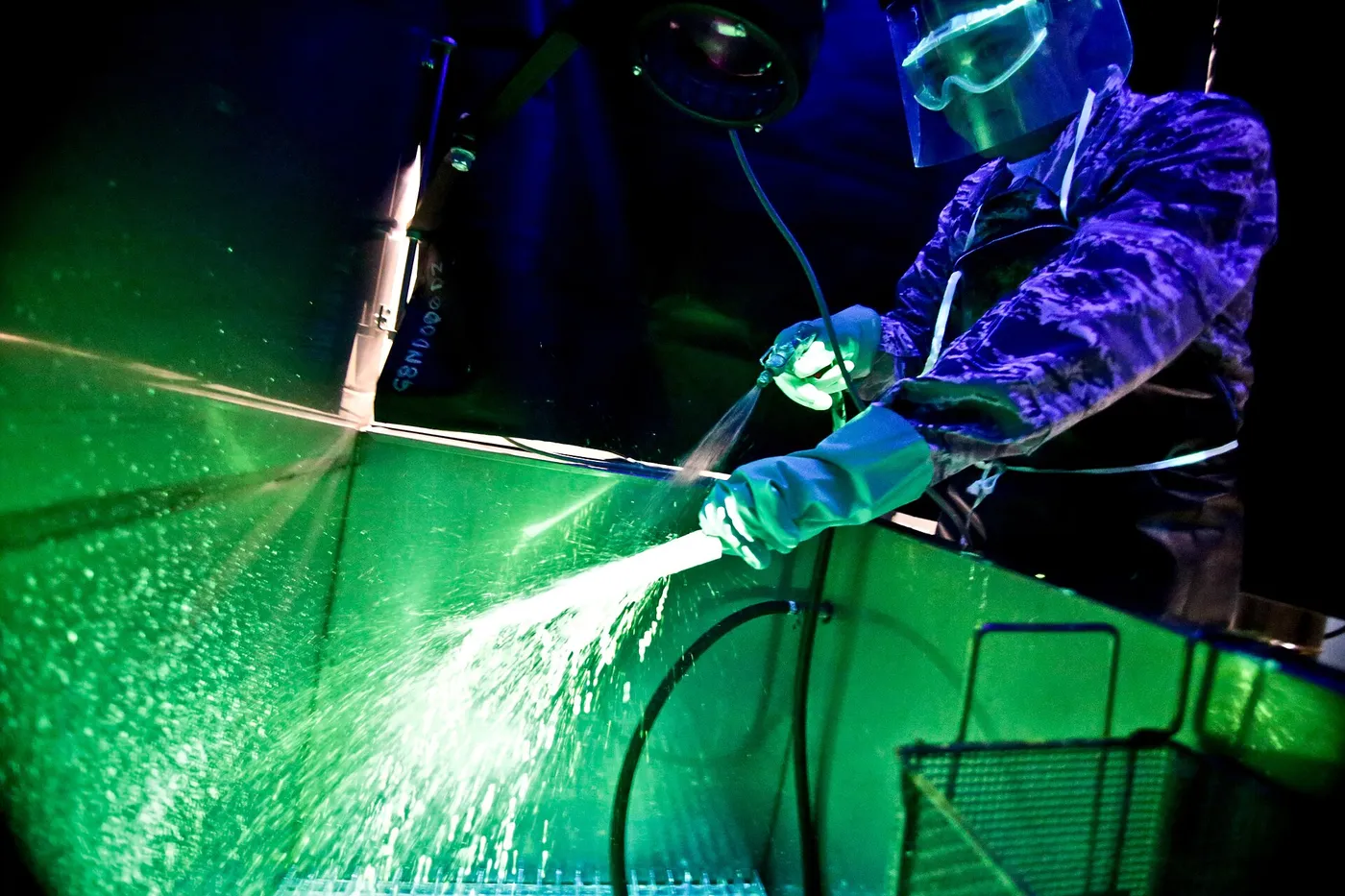
Liquid penetrant testing finds surface-breaking flaws in any non-porous material. It is the usual choice for stainless steel, duplex, aluminium and non-ferrous components where MT cannot be used.
How it works
Penetrant is drawn into surface-breaking flaws by capillary action. After the excess is removed, a developer pulls it back out, leaving a visible or fluorescent indication of the flaw.
Typical applications
- Stainless and duplex piping welds
- Machined parts and valve bodies
- Root-pass and back-gouge checks
- Leak path identification
What you receive
- PT report with photos of indications
- Consumable batch records